

What Is a Progressive Lens?
As our eyes change with age, many people begin to struggle with shifting focus between near, intermediate, and far distances. That is where progressive lenses come in.
Progressive lenses allow you to see clearly at multiple distances through one pair of glasses, making everyday tasks far more comfortable.
Here is a simple explanation of what progressive lenses are, how they work, and who benefits from them.
What Are Progressive Lenses?
Progressive lenses are multifocal lenses that offer a smooth shift in power from the top to the bottom of the lens. This gradual transition allows you to see far away, at arm’s length, and up close without switching glasses.
You look through:
- The top for distance vision
- The middle for intermediate work
- The bottom for reading and close-up tasks
Unlike bifocals or trifocals, progressive lenses have no visible lines. The lens appears to be a single prescription even though multiple powers are built in.

Who Typically Uses Progressive Lenses?
Progressive lenses are most commonly used by people experiencing presbyopia, a natural age-related change that makes near vision harder after age 40.
They can benefit a wide range of wearers, including:
- Adults who need clear vision at several distances
- People who currently switch between two or more pairs of glasses
- Younger wearers with accommodative issues
- Digitally connected patients who need strong intermediate vision
- Drivers who need smooth transitions between dashboard and road
- Professionals with specific visual demands such as electricians, mechanics, or pilots
Progressive lenses are available in many designs, each tailored to different lifestyles and prescriptions.
How Progressive Lenses Work
Progressive lenses use a gradual shift in optical power from top to bottom. Instead of jumping between prescriptions, your vision changes smoothly as your eyes move.
- The top portion provides distance correction
- The middle supports intermediate tasks such as computer use
- The lower portion provides reading power for close work
This smooth design avoids the abrupt “image jump” found in bifocals and trifocals, which many wearers find more comfortable and natural.
Types of Progressive Lenses
There is no single progressive lens that works best for everyone. Designs range from basic to highly customized options.
The main categories include:
- Standard or conventional progressives: Affordable, molded designs with less customization and narrower viewing zones
- Freeform entry-level progressives: Digitally surfaced for better clarity, but not personalized
- Freeform mid-range progressives: Improved customization, reduced distortion, and wider clear zones
- Advanced freeform progressives: Fully personalized based on prescription, frame, posture, eye dominance, and lifestyle
Dual-Surface Progressive Lenses
- Advanced designs applied to both sides of the lens
- Widest fields of view and most natural vision
- Ideal for premium wearers seeking top performance
Specialized Progressive Types
- Computer or office progressives for extended intermediate work
- Short-corridor progressives for smaller frames
- Ground-view designs for golfers or outdoor tasks
- Photochromic progressives that darken in sunlight
This wide variety is why choosing the right progressive design makes such a noticeable difference.
Benefits of Progressive Lenses
- One pair of glasses for all distances
- No visible lines in the lens
- Reduced eye strain
- Smoother visual transitions
- A more youthful, natural appearance
Challenges and the Adjustment Period
Most people adapt to progressive lenses with a short adjustment period. Some wearers may experience:
- Slight peripheral blur
- A mild “swim” sensation during the first few days
- The need to point the nose toward objects to find the clearest zone
Most wearers adjust within one to two weeks. Proper measurements, correct frame fit, and wearing the glasses full time during the early days all help speed up adaptation.
Why Progressive Designs Vary by Brand
Every manufacturer uses different technologies and calculation methods. As a result:
- Reading zones may be wider or narrower
- Peripheral blur levels can differ
- Intermediate zones vary in size
- Customization options change from brand to brand
This is where the value of an independent lab becomes especially important.
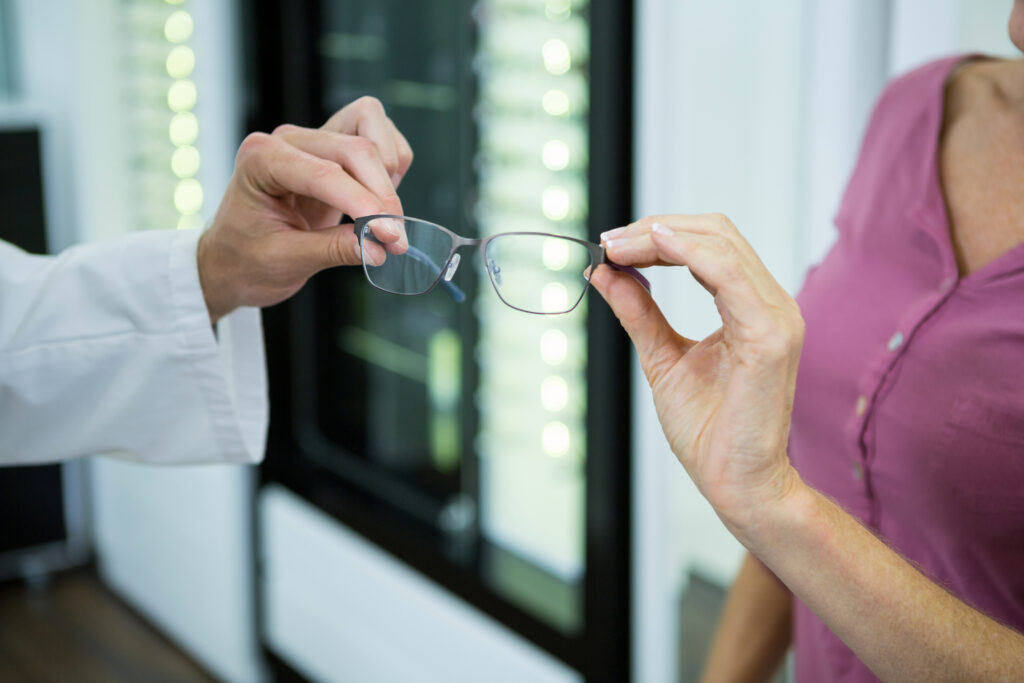
Progressive Lenses at rxotulsa
As an independent wholesale lab, rxotulsa offers a wide range of progressive lens designs from multiple manufacturers.
This flexibility allows us to match each patient with a design that fits their lifestyle, prescription, frame choice, and budget.
Whether you need an advanced dual-surface design, a premium intermediate-focused lens for computer work, a short-corridor option for smaller frames, or a value-friendly entry-level progressive, we can produce it.
Our independence gives you choice. Our expertise helps you select the right design every time.
Your Next Step
If you are considering progressive lenses for yourself or your patients, our team is always here to help guide you through the options.
Clear vision at every distance starts with the right lens design, and rxotulsa is ready to customize the perfect solution.